
Professor Ranjith Pathegama Gamage
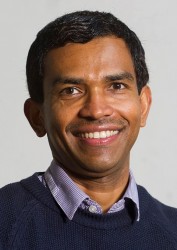
Professor Ranjith Pathegama Gamage
Distinguished Professor Ranjith Pathegama Gamage
Vice Chancellor’s Distinguished Professor
Global Research Leader | Senior Fulbright Scholar | Humboldt Research Awardee | Fellow of ATSE, FREng, CAE & INAE
Professor Ranjith Pathegama Gamage, Vice-Chancellors Distinguished Professor, is a globally recognised engineering innovator whose inventions have transformed sustainable energy systems, low-carbon construction materials, critical-mineral recovery, and carbon-negative technologies. He is an elected Fellow of the Royal Academy of Engineering (UK), the Australian Academy of Technology and Engineering, the Chinese Academy of Engineering, and the Indian National Academy of Engineering, placing him among the world’s most distinguished engineers.
He is pioneering Deep-Earth Systems for Sustainable Development (DESSD), an emerging scientific and engineering framework that integrates energy, critical minerals, carbon management, underground infrastructure and water into a unified approach for the sustainable stewardship of the deep subsurface.
His breakthroughs include:
-
Carbon-negative CO₂-based geothermal energy, a world-first system that replaces water with CO₂ to generate clean baseload power while permanently sequestering carbon dioxide.
-
Eco-Green Cement, an entirely waste-derived, ultra-low-carbon construction material achieving up to 90% reduction in CO₂ emissions.
-
SREMA, a non-explosive, low-energy, in-situ mineral extraction technology that eliminates tailings and reduces mining energy consumption by more than 40%.
-
Rapid CO₂ mineralisation, converting industrial CO₂ into stable minerals within 24–36 hours to produce permanently carbon-negative materials and agricultural fertilisers.
These innovations offer scalable, commercially viable pathways for global industries to accelerate climate mitigation, advance resource security, and transition to circular, low-carbon economies. His work directly supports UN Sustainable Development Goals 7, 9, 11, 12, and 13 and has influenced national decarbonisation strategies and industrial practice in Australia, China, India, Turkey, and several European nations.
Professor Gamage leads the Monash Deep Earth Energy and Resources Laboratory, home to world-class experimental facilities capable of simulating subsurface conditions exceeding 12 km depth. Supported by more than $40 million in research investment, this facility enables next-generation breakthroughs in geothermal energy, hydrogen storage, deep-earth resources, and CO₂ sequestration. He also leads major industry collaborations, including a partnership with Woodside Energy on repurposing legacy wells for clean-energy transition.
With over 705 publications and exceptional citation impact (H-index 113; >43,000 citations), his work forms a foundational knowledge base for geomechanics, carbon-neutral energy systems, sustainable mining, and environmental geotechnology. His achievements have been recognised through numerous prestigious awards, including the Humboldt Research Award, the Senior Fulbright Fellowship, multiple national Friendship Awards in China, and the inaugural ARC Future Fellowship in climate-related engineering innovation.
A committed mentor and academic leader, Professor Gamage has supervised 80 PhD graduates and more than 35 early-career researchers, many now in senior roles across academia, industry, and government. He is the founder and current Editor-in-Chief of Geomechanics for Geo-Energy and Geo-Resources (Springer), a leading international journal for the global subsurface energy transition. He is also the founder and Chair of the International Conference on Geomechanics, Geophysics for Geo-Energy and Geo-Resources (IC3G), a major international platform linking academia, industry, and policy.
Professor Gamage’s career exemplifies the integration of scientific discovery, engineering innovation, environmental stewardship, and societal impact, establishing him as one of the world’s leading figures in sustainable energy and resource engineering.
Qualifications
- Doctor of Science (DSC), Monash University
- Doctor of Philosophy (PhD), University of Wollongong, Australia
- Bachelor of Science, Eng (First class Honours), University of Moratuwa, Sri Lanka
Expertise
- Global Leadership in Geomechanics, Resource Recovery, and Energy Transition
Professor Ranjith Pathegama Gamage is a global expert in deep-earth geomechanics, sustainable resource recovery, and clean energy systems. His interdisciplinary research focuses on addressing critical challenges in subsurface engineering, with applications spanning geothermal energy, unconventional gas, critical mineral extraction, and CO₂ sequestration. He has developed transformative technologies such as CO₂-based rock stimulation, eco-green cement from industrial waste, and Slow Releasing Energy Material Agents (SREMAs) for low-impact mineral recovery.
His expertise integrates large-scale experimental testing, advanced modelling, and field-scale implementation. He is internationally recognised for developing safe, efficient, and scalable methods for resource extraction under extreme geological conditions (e.g., high stress, high temperature, deep formations), aligned with global sustainability and net-zero targets.
Key areas of expertise include:
-
Deep Geothermal Energy and Heat Extraction Technologies
-
Sustainable Mining and In-Situ Mineral Recovery
-
CO₂ Sequestration and Utilisation (CCUS/CCS)
-
Green Cement and Circular Construction Materials
-
Unconventional Gas Recovery (e.g., Shale Gas, Tight Gas)
-
Rock Fracturing and Subsurface Stimulation Technologies
-
High-Pressure Rock Mechanics and Geomechanical Modelling
-
Climate Action Engineering for Net-Zero Transition
-
Experimental Geomechanics: Micro to Macro Scale
-
Mentorship and Research Leadership in STEM
Prof. Ranjith’s research has been supported by the ARC, Fulbright Program, Humboldt Foundation, and major industry partners.
-
Professional Appointments
Senior Fulbright Fellow, Lawrence Berkeley National Laboratory, USA
Professor, Department of Civil Engineering, Monash University
Director of International (Civil Engineering), Monash University
ARC Future Fellow, Monash University
Associate Professor, Monash University
Senior Lecturer, Monash University
Assistant Professor, Nanyang Technological University, Singapore
Research Fellow, University of Wollongong
Lecturer, University of Moratuwa, Sri Lanka
Learned Societies and Fellowships
Fellow of the Royal Academy of Engineering (FREng), UK
Foreign Fellow, Chinese Academy of Engineering (CAE)
Foreign Fellow, Indian National Academy of Engineering (INAE)
Fellow, Australian Academy of Technology and Engineering (FTSE)
Member, European Academy of Science and Arts
Fellow, Institute of Materials, Minerals and Mining (IOM3), UK
Fellow, Geological Society of London
Fellow, American Society of Civil Engineers
Fellow, Engineers Australia
Editorial and Scholarly Leadership
Founding Editor-in-Chief, Geomechanics for Geo-Energy and Geo-Resources (Springer)
Founder and Chair, International Conference on Geomechanics, Geophysics for Geo-Energy and Geo-Resources (IC3G)
Professional Memberships
Life Member, American Rock Mechanics Association
Member, ASCE Geo-Institute
Member, Society of Petroleum Engineers (SPE)
Member, American Geophysical Union
Member, International Society of Rock Mechanics
Member, Tunnelling and Underground Construction Society of Singapore
Working Group Member, International Tunnelling Association
National Representative (Singapore), Environmental Commission for Underground Activities
Awards and Honours
Humboldt Research Award
Senior Fulbright Fellowship
Highly Cited Researcher (Clarivate)
UOW Alumni Award
World Leader in Mining and Mineral Resources (The Australian)
Field Leader in Environmental and Geological Engineering (The Australian)
Field Leader in Oil, Gas and Petroleum Engineering (The Australian)
Excellence in Sustainability Research Award (Elsevier)
ARC Future Fellowship Award
VC Award for Excellence in Postgraduate Supervision
Dean’s Award for Postgraduate Supervision
Dean’s Award for Excellence in Research
Australia–China Fellowship Award
Australia–China Group Mission Award
Australian Leadership Award
VC Award – Early Career Researcher
Research Projects
Not started projects
Development of new technologies for deep coal-seam gas recovery.
Current projects
National Drop Weight Impact Testing Facility.
The seven Australian universities named in this proposal aim to develop a ‘national drop weight impact testing
facility’ for dynamic tests on geo- and construction materials and systems. This facility will provide state-of-the art
technology to observe the real time behaviour of elements and sub-assemblies under combined quasi-static and
impact loading. The large capacity and unique configuration of the facility make it feasible to carry out innovative
research in impact engineering. Applications include, but are not limited to, the structural safety of high impact risk
infrastructure including railway networks, tunnels and bridges, and also the development of cost-effective and
environmentally friendly building and construction materials.
An Advanced, Macro-scale, hydro-thermo-mechanical Testing Chamber for sustainable deep geological applications.
The deep Earth offers significant promise for enhanced sustainability, including novel options for resource
development and pollutant storage. A firm understanding of expected engineering behaviour is key to
successful ultilisation of the deep Earth. Engineers and geologists from nine leading Australian universities
are developing a new large-scale device capable of recreating ground conditions at depths up to 13km. The
Advanced Macro-scale Testing Chamber (AMTC) will be used to study hydro-thermo-mechanical aspects of
deep geological applications, including carbon dioxide storage, enhanced geothermal energy and
unconventional hydrocarbon reservoir development. The AMTC will also have capacity to study mechanisms
leading to earthquakes.
Geological sequestration of carbon dioxide in deep saline aquifers: coupled flow-mechanical considerations.
This project aims to evaluate the feasibility of large scale storage of carbon dioxide (CO2) in deep saline aquifers. Currently the ease with which CO2 can be pumped into these rock strata, and their storage capacity are uncertain because there is limited data on the effects of CO2 on the geo-mechanical properties of the rocks. Through performing experiments to quantify the physical and chemical changes that occur, a new model will be developed that can account for the interactions between the flow and mechanical response. This model will be used to study the response of reservoirs during CO2 sequestration and to provide guidance on optimum injection and storage strategies.
Multi-functional nano-modified cementitious materials for well cementing.
The integrity and longevity of well cement are paramount for the safe, efficient, environmentally sustainable
production of oil and natural gas resources. Cementing problems are the main factor contributing to incidents
during drilling and completion of wells. By incorporating different nano-materials in well cements, this project aims to develop multi-functional nano-modified cementitious materials with self-sensing properties and greater strength and durability under extreme conditions including high/low temperatures, high pressure and corrosive environments. It is expected that the novel cement developed will produce safer wells with fewer (gas) environmental emission risks, reducing the need for costly and wasteful remedial squeezes.The integrity and longevity of well cement are paramount for the safe, efficient, environmentally sustainable
production of oil and natural gas resources. Cementing problems are the main factor contributing to incidents
during drilling and completion of wells. By incorporating different nano-materials in well cements, this project aims to develop multi-functional nano-modified cementitious materials with self-sensing properties and greater strength and durability under extreme conditions including high/low temperatures, high pressure and corrosive environments. It is expected that the novel cement developed will produce safer wells with fewer (gas) environmental emission risks, reducing the need for costly and wasteful remedial squeezes.
Past projects
High precision ISSCO syringe pump.
Hot Dry Rock geothermal resources in Australia and India: opportunities for collaboration in the development of a new sustainable energy resource.
Long-term mechanical-flow performance of an enhanced geothermal reservoir.
Extraction of heat (geothermal energy) from deep earth is promising but inefficient so far. Heat is transferred when
huge quantities of water are pumped through; but recovery of heat is low and much water is lost. This Project
researches carbon dioxide (CO2) as an alternative to water. There are excellent prospects of relatively efficient
recovery. And any loss of CO2 as a working fluid in deep-earth geothermal reservoirs is beneficial: it is permanent
sequestration of carbon. The Project addresses fundamental questions on the evolution of fluid-flow systems,
recovery rate, long-term injectability, and mechanical-flow behaviour. Findings are expected to provide practical
information on the geomechanical viability of this green power option.
608517-TOPS in the Energy Call: FP7-ENGERY-2013-1.
Three dimensionally compressed and monitored Hopkinson bar.
Understanding material behavior under dynamic loading is essential in dealing with many engineering problems as excavation, fragmentation, earthquake, blasting, and structure design. In geo-technical and structure projects, materials are often subjected to existing confining stresses. The proposed 3 dimensional compressed and monitored Hopkinson bar allows determination of the dynamic mechanical properties and fracturing behavior of materials under such confinement. The full-field optical techniques with an ultra-high speed and resolution camera in the system will assist the quantitative measurement of deformation fields including small strain induced in brittle material’s failure and identification of constitutive parameters.
Australia-China Group Mission on the issue of Technology relating to Sustainable alternative Energy from the Deep Earth.
This group mission (GM) will seed collaboration between leading researchers in Australia and China, on the topic of fundamental and applied research on the use of the deep Earth for future energy sustainability. The GM will help facilitate working inter-institutional and inter-disciplinary relationships in the area of technical research on the development of: (1) new unconventional hydrocarbon energy resources; (2) underground coal gasification; (3) new geothermal energy resources, and (4) schemes for deep geological sequestration of carbon dioxide. Effective collaboration on the issue of deep Earth energy alternatives, between a coalition of leading Australian and Chinese researchers, will help build the research profiles of both countries in the area of energy technology and will provide new opportunities for export of ideas and technology. Australia and China’s early involvement in the development of creative energy solutions will help to secure the energy future of both countries.
Turning pile foundations into sources of renewable energy: addressing remaining geotechnical challenges.
Heat exchanger pile foundations are increasingly used to improve the energy efficiency of buildings and reduce their carbon footprint. However their geotechnical performance when subjected to heating and cooling processes is not well understood.
We aim to develop full understanding of the fundamental mechanisms controlling the thermo-mechanical behavior of heat exchanger piles using large scale field tests. The project will make a breakthrough in understanding the influence of temperature cycles on pile group behavior and shaft resistance. This will lead to improved design, greater confidence in heat exchanger pile systems by the engineering community and more reliable low carbon technology.
Hybrid Testing Facility for Structures under Extreme Loads.
The twelve Australian universities named in this proposal propose to develop a Hybrid Testing Facility (HTF)
for Structures under Extreme Loads. The LIEF proposal will facilitate the establishment of advanced testing
facility with access to the universities involved and to government and industry partners associated with
them. This next generation of structural testing will embrace hybrid testing in static, pseudo-dynamic and fast
modes and simulation of structures subjected to extreme loading events such as earthquakes, blast, impact,
fire, wind and ocean waves. Applications include structural safety of buildings, bridges, offshore structures,
mining structures and development of efficient renewable energy structures.
An assessment of carbon dioxide storage capacity of water bearing sedimentary basins.
Considerable urgency exists with respect to further developing the concept of CO2 storage in deep saline aquifers, which is the storage option with the largest capacity. However, one of the major uncertainties with this scheme is the poor knowledge of storage capacity assessment methods, coupled mechanical, flow and transport properties of such rocks under the influence of CO2. This project aims to reduce these uncertainties by experimental investigations of storage assessments of sandstone, the transport properties, and the effects this has on the mechanical properties. The data will be used to develop new storage models to investigate storage capacity of saline aquifers and identify suitable aquifers for large scale sequestration of CO2.
Improvement of the performance of water-sensitive geomaterials using hydrophobic additives.
Development of Leakage Resistant Well-Cements for Geo-Sequestration of Carbon Dioxide Application using Alkali Activated Slag and Geopolymer Cements.
Geo-sequestration is the most promising technology for disposing CO2 emissions. Currently, geo-sequestration uses Portland cement for sealing the wells after injecting the CO2 to underground reservoirs. The high pressure CO2-brine is acidic and is found to dissolve the Portland cement well-seals, and has been identified as one of the biggest risk factors of long term leakage of CO2. The project will study novel cements with superior acid resistance, containing no Portland cements. Leakage rates of all these cements will be studied in geo-sequestration simulating test facilities and numerical models will be developed for long term leakage rates. Leakage-proof well cements will be identified/developed for viable geo-sequestration technology.
Advanced Testing Facility for Geological Sequestration of Greenhouse Gases.
A facility for the analysis of geological materials and their geo-thermal-mechanical interactions with complex fluids (such as carbon dioxide CO2, water, methane) is required to support a large number of research projects in high priority areas including geological sequestration of greenhouse gases and oil/gas recovery at three different leading Universities. The unique features of the proposed facility are that it is capable of analysis large samples, under multiple forms of loading and over a range of high pressures and temperatures. This will enable us to do proper design, management, and optimization of subsurface CO2 sequestration operations for safe storage of CO2 in geological formations.
A laboratory investigation of the effects of gas adsorption on the fluid transport and geomechanical properties of coal with application to enhanced coalbed methane recovery and carbon dioxide sequest.
Investigation of permeability of fractured, steep and deep rock slopes with high groundwater pressures.
The investigation of influence of scale effects of strength failure modes of deep open cut slopes.
Investigation of strength deformability and failure mechanism of rock slopes in large open pit mines.
Hydro-mechanical interactions in coal geo-sequestration of carbon dioxide.
Geo-sequestration of carbon dioxide (CO2) is considered the most promising technology to reduce atmospheric release of CO2. The storage of CO2 in deep unmineable coal deposits has many advantages that include: a high storage capacity, high permeability, and the release of methane, a valuable resource. However, there is considerable uncertainty regarding the impact of CO2 on the mechanical properties of the coal. This project aims to reduce these uncertainties by experimental investigations of the transport of CO2 through coal, and the effects this has on the mechanical properties. The data will be used to develop new coupled numerical models that will be used to investigate the procedures required for successful sequestration.
Influence of scale effect on the strength of rock mass for the better prediction of slope stability in large open-cut mines.
The research project will concentrate primarily on understanding the mechanisms of slope failure in large and deep open cut mines with the goal of developing improved assessment criteria for designing rock slopes. Mechanisms governing shape, location and propagation of slope failure surfaces are highly dependent on insitu and induced stresses, strength of rock mass, and induced pore water pressure. Accurate determination of rock mass strength and their use in slope stability analysis will enable mining engineers to develop improved slope design methodologies which will enable them to enhance the safety of the mine workers and to reduce lost time and increase the production.
A laboratory investigation of the mechanisms of gas migration in coal seams with application to coalbed methane recovery and carbon dioxide sequestration.
A study of Cap rock integrity for CO2 storage projects.
Publications
Distinguished Prof. Ranjith Pathegama Gamage has an impressive portfolio of 705 publications, including 1 book, 8 book chapters, 620 refereed international journal papers, 75 refereed international conference papers, and 2 editorials. His research has had a profound global impact, placing him in the top 1% of highly cited researchers in Geomechanics. His outstanding citation metrics underscore the significance of his work: a career Scopus h-index of 105 with 37,124 citations, and a Google Scholar h-index of 113 with 43,000 citations. These achievements reflect his remarkable influence and leadership in the field.
https://scholar.google.com/citations?user=rlSD-Z9UWUUC&hl=en,
https://www.scopus.com/authid/detail.uri?authorId=6602607278
Teaching Commitments
- CIV2242 - Goemechanics.
- CIV5886 - Infrastructure Geo-mechanics (MSC).